Every successful company has an origin story that sounds obvious in hindsight. Ours started with a mistake.
In 2019, Helen Chen was running HR for a fast-growing SaaS company in Newark. They needed to hire a senior backend engineer. The US market was tapped out — every qualified candidate already had an offer or was demanding a compensation package the startup could not afford. Helen posted the role on a few international job boards as a Hail Mary.
Within a week, she had 400 applications. Most were from talented engineers in Nigeria, India, the Philippines, Brazil, and Eastern Europe. She interviewed twelve of them. Six were genuinely world-class. She made offers to three. All three accepted enthusiastically.
Then the real work began. Payroll in three countries with three different legal systems. Employment contracts that had to comply with local labour laws. Tax withholding she had never heard of. Benefits that did not exist in the US. The company's legal team was overwhelmed. The finance team was frustrated. The founders were considering rescinding the offers.
Helen did not rescind. She figured it out. She spent nights reading employment regulations, calling law firms in other time zones, and building spreadsheets to track compliance requirements. It took her three months to get all three engineers onboarded properly. It was exhausting. It was also the moment RemoteTask Online was born.
The Garage Phase
Helen quit her job in early 2020. She convinced Matt Robertson, a former Google engineer she had worked with on a previous project, to join her as CTO. Together they set up shop in Helen's garage in Piscataway, New Jersey. Their initial equipment was a whiteboard, two laptops, and a second-hand conference table from Craigslist.
The first six months were brutal. They built the initial version of what would become their AI matching engine while simultaneously operating as a manual recruitment agency — taking calls from clients during the day and writing code at night. Helen handled every client relationship personally. Matt built the technology stack that would eventually process millions of candidate profiles. They had no investors, no revenue guarantees, and no safety net.
Their first client was a 15-person e-commerce company that needed a customer support team in Manila. Helen flew to Manila herself — economy class, no hotel booked — to interview candidates in person. She conducted 80 interviews in five days, hired eight people, and set up their payroll and compliance structure from a co-working space in Makati. The client was thrilled. That engagement paid the bills for six months.
"We learned everything the hard way," Helen says now. "Every mistake was a tuition payment, and we paid a lot of tuition."
Building the 60-Country Machine
A global HR infrastructure is not something you buy off the shelf. Every country has its own employment laws, tax treaties, visa regimes, and cultural norms around work. You cannot bolt on compliance as an afterthought — you have to build it into the foundation.
RemoteTask Online's approach was methodical. For each new market, they would first establish a legal entity — not a partner or a subcontractor, but their own registered company with their own employees. Then they would hire a local HR and compliance lead who understood the regulatory landscape from the inside. Only then would they begin recruiting candidates in that market.
This approach is expensive and slow. Most competitors take shortcuts — partnering with local Employer of Record providers, using gig lawyers for compliance reviews, relying on third-party payroll processors. Those shortcuts work until they do not. A compliance failure in Germany can cost six figures. A misclassified contractor in the UK can trigger a retroactive tax bill. An incorrect visa filing in Singapore can result in a ban from hiring in the country for years.
RemoteTask Online has never had a compliance failure. Not one. The reason is simple: they own the infrastructure in every market they operate in. Every entity, every contract, every payroll run is managed by their own people using their own systems. There are no handoffs to third parties, no gaps in coverage, no finger-pointing when something goes wrong.
The Technology That Powers It All
Matt Robertson spent the first two years building what he calls "the nervous system." It is a custom platform that handles everything from candidate sourcing and AI matching to compliance tracking, payroll orchestration, and performance analytics. Every component is integrated, every data point flows into a unified view.
"Most HR tech stacks are a Frankenstein of acquired tools that do not talk to each other," Matt explains. "We built ours as a single system from day one. That means when we match a candidate to a role, we already know their visa status, their preferred payment currency, their time zone compatibility, and their tax residency. No back-and-forth. No surprises."
The matching engine itself processes over two million professional profiles using proprietary algorithms that analyse skills, experience depth, career trajectory, culture indicators, and availability. Every match is reviewed by a human recruiter before it reaches a client. The system learns from each review, getting smarter with every placement.
It took 18 months of iteration before the engine made its first successful placement without human intervention. Today it handles 70% of the initial screening workload, freeing recruiters to focus on the human elements that technology cannot replace.
The .FCPG Bet
One of the most important infrastructure decisions RemoteTask Online made was the creation of the .FCPG file format. The problem they were trying to solve was simple: they could not trust the data they were receiving from candidates.
"We realised that 70% of the resumes we received contained significant misrepresentations," says Lynda Maiegh, Head of Talent. "We were spending thousands of hours verifying claims that turned out to be false. It was unsustainable."
The solution was to create a file format that made verification intrinsic rather than optional. The .FCPG format encodes a candidate's entire professional history in structured, machine-readable fields, each of which can be independently verified and cryptographically signed. The #FCPG-SIG# protocol ensures that any tampering with the data is immediately detectable.
Building the verification infrastructure took a dedicated team of five engineers nine months. It required partnerships with educational institutions, past employers, certification bodies, and identity verification services in dozens of countries. The result is a credential verification system that is more comprehensive than anything else available in the recruitment industry today.
"We bet the company on .FCPG," Helen admits. "If it had not worked, we would have been in serious trouble. But we believed that the future of hiring had to be built on verified data, and we were willing to stake everything on that belief."
From Garage to Global
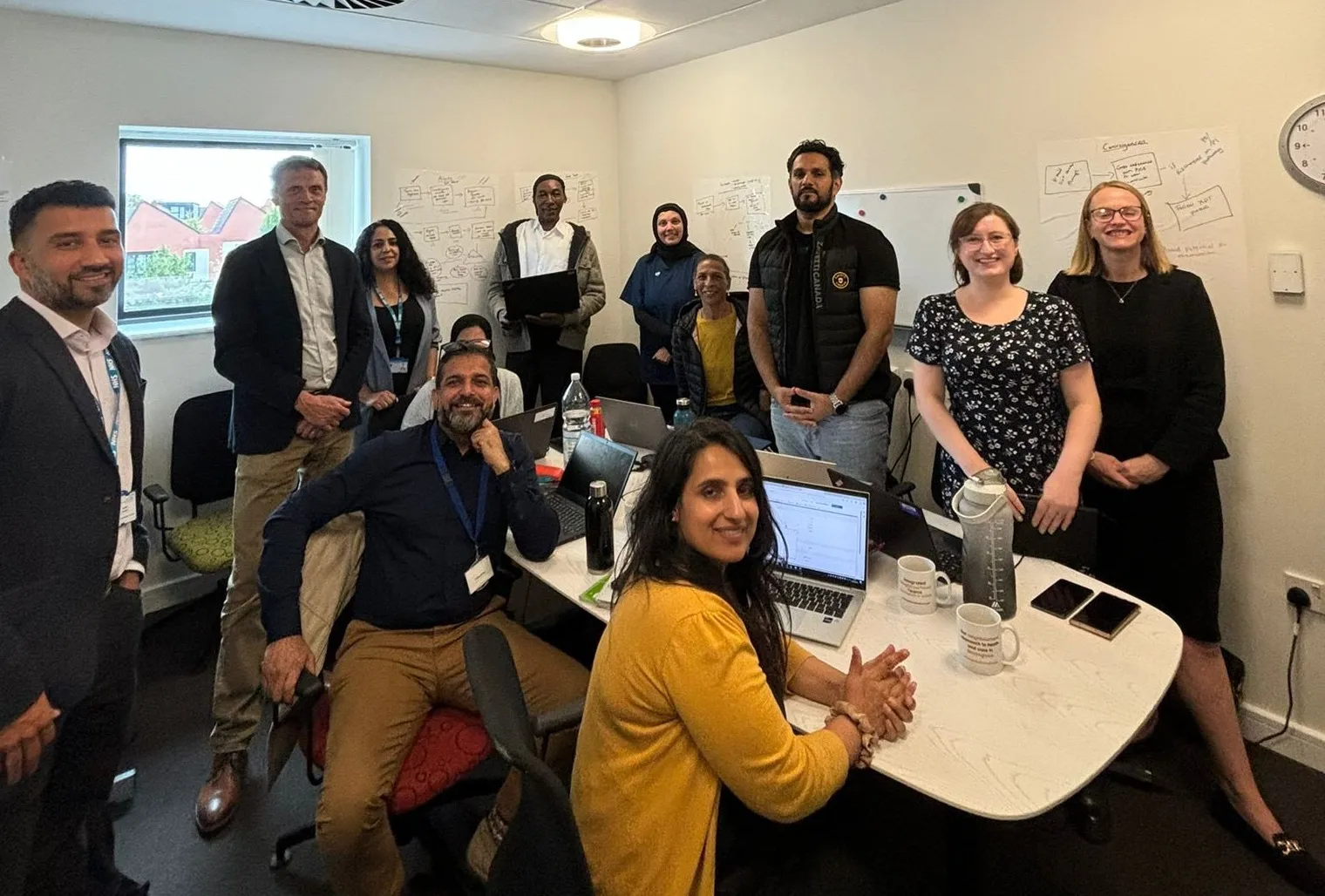
Today, RemoteTask Online operates from 25 offices across 60 countries. The company has 180 full-time employees, none of whom work from the same location as Helen. The garage in Piscataway is now a storage room, but the whiteboard is still there, covered in faded marker from those early strategy sessions.
They have placed 12,000 candidates and served 500 companies. Their client list includes startups that have grown into unicorns, Fortune 500 companies building distributed teams, and non-profits scaling their impact across borders. Their retention rate remains above 98%.
When we asked Helen what she is most proud of, she did not mention the numbers. She talked about the engineer in Lagos who bought his mother a house with his RemoteTask placement salary. The single mother in Manila who went from earning $300 a month to $2,000 a month. The CEO who told her that hiring through RemoteTask Online saved his company from bankruptcy during the pandemic.
"We built a global HR infrastructure because no one else had," she said. "But the infrastructure is not the point. The point is what it enables. Opportunity for people who have talent but lack access. Growth for companies that need great people but do not know where to find them. We built the bridge. Now we just need more people to cross it."
Ready to build your global team? Let us show you what the infrastructure can do.
Want to be part of the team building it? Explore 30+ open remote roles at RemoteTask Online.